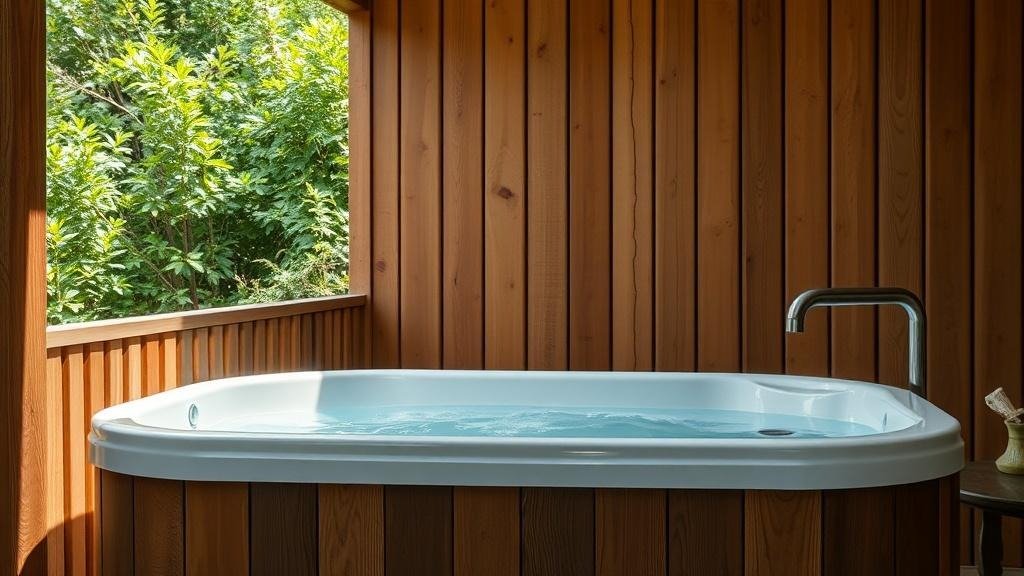
Cold Plunge: What to Know Before You Buy is worth evaluating through the homeowner’s real week, not a perfect catalog photo. The best setup is the one that gets used, stays safe, and does not become a maintenance headache.
A friend of mine, a CrossFit coach in Denver named Travis, texted me a photo last October. He’d just taken delivery of a $6,200 insulated cold plunge tub. It was sitting on a patch of bare dirt next to his garage, plugged into a power strip that also powered his shop vac. “How do I get this thing to 45 degrees?” he asked. The chiller was a 1/3 HP unit. His garage faces south. In August, it would have been a very expensive bathtub.
Travis’s mistake is the most common one I see. People obsess over the tub and barely think about the install. A cold plunge is a real home upgrade when the fundamentals are handled: stable pad, correct chiller sizing, clean electrical, and a realistic maintenance plan. Most residential setups land between $4,500 and $14,000 all-in, depending on materials and chiller class. The rest of this piece is the longer version, with specs, research, cost math, and the stuff product pages skip.
The Part Nobody Wants to Think About: Site Prep and Electrical
Let’s start with the boring truth, because this is where projects go sideways.
A full cold plunge tub with water and a steel or composite chassis puts 800 to 1,200 pounds on a small footprint. That’s roughly the weight of a grand piano concentrated in about 16 square feet. You need a pad that won’t settle, crack, or shift once the load is on it.
For most backyard installs, a 4-inch compacted gravel pad with proper drainage works fine. If you’re on soft soil, or anywhere with freeze-thaw cycles (hello, Midwest and Northeast), pour a 4-inch reinforced concrete pad instead. Fixing a cracked or settled pad after the tub is installed costs three to five times what doing it right costs upfront.
Electrical is the other place where shortcuts haunt you. Most residential cold plunge units run on a standard 110V outlet, which sounds simple. But it needs to be a properly grounded GFCI outlet on its own dedicated circuit. If your nearest outlet is more than 25 feet away or shares a circuit with a shop compressor or space heater, have a licensed electrician run a dedicated 20A line. Some commercial-grade chillers require 240V, which always means a licensed electrician and usually a permit.
Travis ended up spending $1,400 on a concrete pad and $650 on a dedicated circuit. He could have budgeted for that from the start if anyone had told him to.
Reading a Spec Sheet Without Getting Fooled
Cold plunge spec sheets look straightforward, but they’re designed to sell the unit in ideal conditions. Here’s what actually matters.
Chiller HP vs. tub volume and ambient temperature. A 1/3 HP chiller can hold 50°F in a well-insulated 80-gallon tub in a temperate climate. That same chiller will run nonstop in a Phoenix garage in July and burn out its compressor inside two summers. Match the chiller to your worst-case ambient temperature, not your average one.
Insulation. Cheap tubs skimp here. If the manufacturer doesn’t list R-value or insulation type, ask. An uninsulated tub in a cold climate makes the chiller work harder to cool (counterintuitive, but the ambient swings force longer run cycles), and in a warm climate you’re just bleeding cold into the air.
Filtration and sanitation. Look for a 5-micron filter cartridge at minimum, plus ozone or UV sanitation. These systems keep water clear for 6 to 12 weeks between full drains. Without them, you’re changing water weekly or swimming in a biology experiment.
Tub material. Stainless steel lasts 15 to 20 years. Rotomolded polyethylene is lighter and cheaper but scratches more easily and can stain. Acrylic sits in between. Pick based on budget and how much cosmetic wear you can tolerate.
Typical residential units hold 80 to 120 gallons, use chillers from 1/3 to 1 HP, target water temperatures of 40°F to 55°F, and are designed for 2- to 5-minute sessions.
What the Research Actually Says (and Doesn’t)
Cold-water immersion research has gotten substantially better in the last decade, but the signal is still noisy.
Heinonen and Laukkanen reviewed cold-water immersion outcomes in 2018 (Frontiers in Physiology) and reported reductions in self-reported muscle soreness, modest improvements in mood, and measurable changes in catecholamine signaling after 2- to 5-minute immersions at 50°F to 59°F. That tracks with what most regular users report: you feel noticeably better afterward, particularly on days with heavy training volume.
A 2022 systematic review by Allan and colleagues (European Journal of Applied Physiology) added an important wrinkle. They found recovery benefits from cold-water immersion after resistance training, but also flagged that very frequent immersions immediately post-lifting may blunt some hypertrophy signaling. The practical takeaway: if muscle growth is the primary goal, separate your cold plunge from your lifting session by at least 4 hours. If recovery and mood are the priorities, the timing matters less.
Here’s my honest read on the evidence. For soreness reduction and subjective well-being, cold immersion has solid support. For performance gains, immune function, fat loss, and the other claims that circulate on social media, the data is thin or mixed. Use it because it makes your recovery days better, not because you think it’ll replace sleep or programming.
And the cardiovascular response is real and non-trivial. Cold exposure spikes heart rate and blood pressure within seconds. Adults with arrhythmias, uncontrolled hypertension, Raynaud’s phenomenon, or who are pregnant should get explicit physician clearance before any home cold immersion. This isn’t a liability disclaimer formality. People have died in cold water.
See also: How Technology Is Revolutionizing Healthcare Diagnostics
The Real Cost Math
A cold plunge purchase is the kind of buy where the sticker price is maybe 60% of the actual number. Budget the unit, the pad, the wiring, any permits, accessories, and the first year of water-care supplies.
Residential insulated tub with integrated chiller: $4,500 to $7,500. This is the sweet spot for most home users. You get a purpose-built tub, a properly matched chiller, and factory-integrated filtration and sanitation.
Commercial-grade stainless build with full filtration: $9,000 to $14,000. Overkill for most home users, but the right call for anyone running a gym, coaching facility, or shared-use setup.
Stock-tank DIY: $400 to $900. Cheap, effective, and deeply inconvenient. You’re buying and hauling ice bags, draining frequently, and accepting that the aesthetic is “rural horse trough.” Some people love this. Most get tired of it inside three months.
Chest-freezer conversion: Even cheaper, but mechanically marginal. No filtration, questionable waterproofing, and if the compressor dies you’re troubleshooting a hacked appliance rather than calling a manufacturer.
Add to any of those: $400 to $900 for a gravel pad, $1,200 to $2,400 for a concrete pad, and $650 to $1,800 for a dedicated electrical run (higher end if 240V is needed).
For those considering the HSA/FSA angle, some home wellness equipment can be reimbursed when a Letter of Medical Necessity (LMN) is on file. Services like TrueMed issue LMNs after a short clinician review for conditions where cold therapy is a recognized treatment input. But eligibility is patient-specific, and the IRS rules are strict. Talk to your tax advisor before counting on this.
Picking the Right Setup for Your Situation
The comparison that matters isn’t “which brand is best.” It’s which format matches your climate, space, routine, and honesty about your own consistency.
A purpose-built insulated tub with a 1 HP chiller holds 39°F to 45°F all day with no manual intervention. You walk outside, get in, get out, and go about your day. That convenience is the entire value proposition, and for people who actually use it daily, it’s worth every dollar.
A stock-tank DIY hits the same temperatures with ice, but it adds 15 to 20 minutes of prep to every session. Think of it like the difference between a home espresso machine and a pour-over setup. Both make good coffee. One requires you to care every single time.
For a longer reference on sizing, materials, chiller classes, and how cold plunge and contrast therapy setups compare side by side, see this cold plunge & contrast therapy guide. It’s the kind of page worth bookmarking before you commit to a purchase.
Three Moments to Call a Professional
One: the pad. Especially in freeze-thaw climates or on soft soil. A contractor or experienced handyman costs a few hundred dollars and saves you from a fix that costs thousands.
Two: the electrical. If you need anything beyond plugging into an existing dedicated GFCI outlet, call a licensed electrician. Water and electricity is not a DIY situation.
Three: a physician. Before you start any cold immersion protocol, talk to your doctor if you have an arrhythmia, uncontrolled hypertension, a recent cardiac event, Raynaud’s phenomenon, are pregnant, or manage a chronic condition. A 10-minute conversation is the cheapest insurance you’ll ever buy.
FAQs
Is a cold plunge safe during pregnancy?
No, not without explicit clearance from your OB-GYN. Core temperature changes carry real fetal risks, particularly in early pregnancy. This is a clear case where you defer entirely to your physician.
How loud is a cold plunge chiller?
Most residential chillers run at roughly 45 to 55 dB at one meter, comparable to a quiet conversation or a refrigerator hum. Place the unit where the chiller noise won’t bother neighbors or interior bedrooms, especially if you’re plunging at 5 a.m.
Can I run a cold plunge year-round in cold climates?
Yes, with caveats. Insulated tubs with integrated chillers handle below-freezing ambient temperatures if the chiller’s operating range allows it. Check the manufacturer’s spec sheet for minimum operating temperature. Some units need a recirculation mode to prevent freeze damage when not in use.
What is the lifespan of a quality cold plunge tub?
Stainless-steel tubs last 15 to 20 years with basic care. Chillers are typically replaced or rebuilt every 6 to 10 years, depending on run hours and maintenance. Rotomolded tubs have shorter cosmetic lifespans but can function just as long structurally.
Do I need a permit for a cold plunge installation?
The tub itself rarely requires a permit. The electrical work almost always does, especially for a 240V circuit. Some municipalities also require plumbing permits if you’re hard-piping a drain line. Call your local building department before ordering.
Disclaimer. This article is general consumer information, not medical advice. Heat and cold therapies carry real cardiovascular load. Anyone with arrhythmias, uncontrolled hypertension, Raynaud’s phenomenon, recent cardiac events, or who is pregnant should consult a physician before starting any new cold-plunge routine.
HSA and FSA reimbursement on wellness equipment is patient-specific and depends on a Letter of Medical Necessity from a clinician. Talk to your tax advisor before assuming a purchase qualifies.