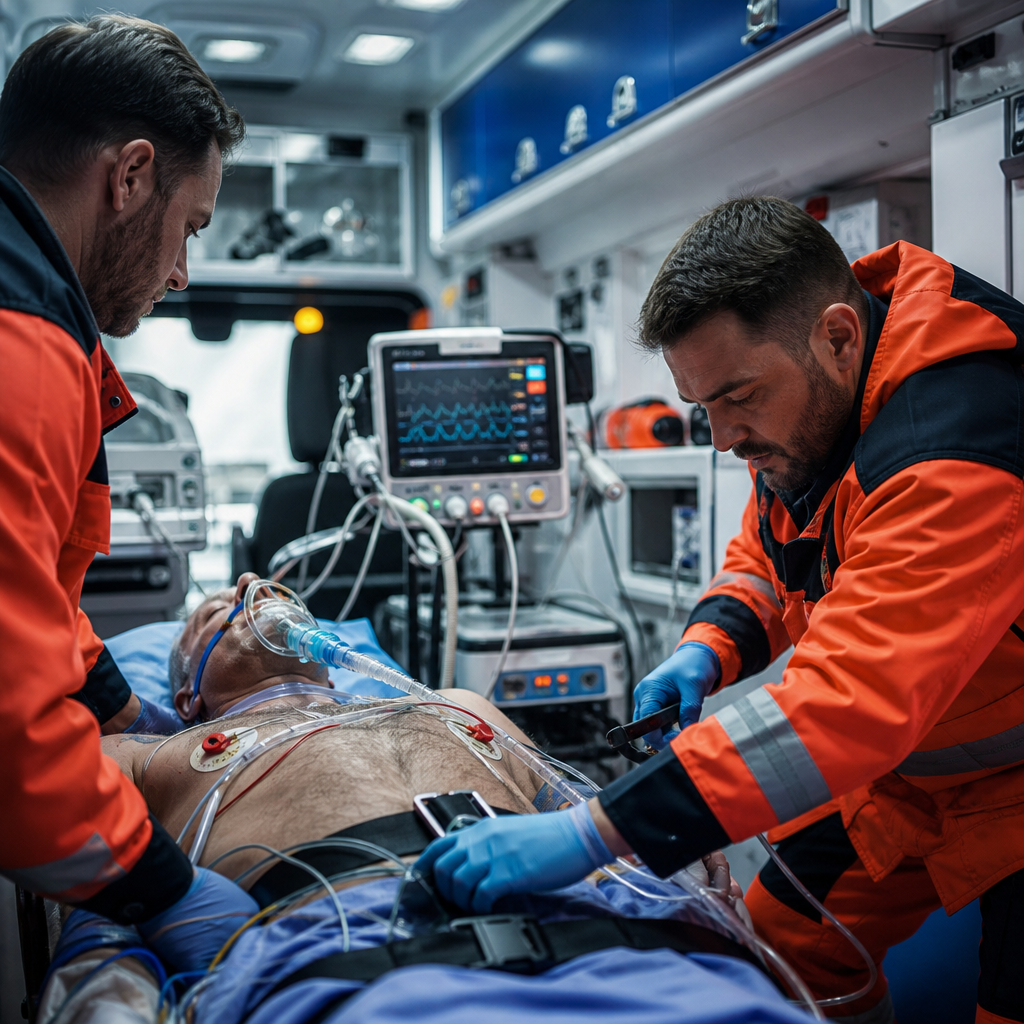
Cardiac emergencies remain among the most time-sensitive medical crises, where every second can determine the difference between full recovery and permanent damage. The integration of advanced diagnostic technology into emergency cardiac care has fundamentally changed how healthcare systems identify, respond to, and treat heart-related emergencies. From ambulance services equipped with portable ECG systems to emergency departments using AI-assisted imaging, technology now serves as the bridge between a patient’s first symptoms and life-saving intervention.
Understanding how these technological advances work together reveals not just medical progress, but also practical implications for patients and communities seeking to improve cardiac care outcomes. The coordination between pre-hospital diagnostics, emergency department protocols, and specialist intervention creates a system where technology amplifies human expertise at every stage.
Pre-Hospital Diagnostics Change the Emergency Timeline
Modern ambulance services carry diagnostic equipment that was once confined to hospital emergency departments. Portable 12-lead electrocardiogram devices allow paramedics to transmit cardiac rhythm data directly to receiving hospitals while the patient is still in transit. This transmission means that cardiologists can review the ECG before the ambulance arrives, identifying ST-segment elevation myocardial infarction or other critical patterns that require immediate catheterization lab activation.
The result is measurable: door-to-balloon times decrease when hospitals receive advance notice, and patients with confirmed STEMI can bypass the emergency department entirely and proceed straight to the catheterization lab. This workflow eliminates delays that traditionally occurred while emergency physicians ordered tests, waited for results, and consulted with cardiology. Instead, the catheterization team assembles while the patient is en route, ready to begin intervention within minutes of arrival.
Blood Biomarker Testing at the Point of Care
Point-of-care troponin testing represents another technological shift in cardiac emergency response. Traditional troponin tests required blood samples to be sent to a central laboratory, with results returning in 45 to 90 minutes. High-sensitivity troponin assays performed at the bedside now deliver results in 15 to 20 minutes, allowing emergency physicians to make faster decisions about patient disposition and treatment.
These rapid tests also support rule-out protocols for low-risk patients. A negative high-sensitivity troponin result at presentation, combined with a second test at one or two hours, can safely exclude acute myocardial infarction in patients without ongoing symptoms or high-risk ECG changes. This approach reduces unnecessary hospital admissions while ensuring that patients with genuine cardiac events receive appropriate monitoring and intervention.
Imaging Technology Accelerates Diagnosis
Cardiac CT angiography has become a standard tool in emergency departments evaluating patients with chest pain of uncertain origin. The scan takes minutes to perform and can simultaneously assess for coronary artery disease, pulmonary embolism, and aortic dissection—the three most immediately life-threatening causes of acute chest pain. This triple rule-out protocol eliminates diagnostic uncertainty that previously required multiple tests or prolonged observation periods.
Advances in diagnostic imaging technology have also improved the speed and accuracy of echocardiography in emergency settings. Portable ultrasound devices small enough to fit in a pocket allow emergency physicians to perform focused cardiac ultrasounds at the bedside, identifying pericardial effusion, severe valve dysfunction, or wall motion abnormalities within minutes of patient arrival. These immediate assessments guide treatment decisions before formal cardiology consultation or comprehensive imaging studies.
Connecting Patients with Specialist Cardiac Care
Access to specialized cardiac services often determines patient outcomes in emergency situations. Multi-specialty hospitals with comprehensive heart and vascular institutes provide integrated care that spans from emergency intervention through rehabilitation. For patients experiencing cardiac symptoms in the UAE region, seeking evaluation from facilities with dedicated cardiac emergency protocols and round-the-clock catheterization capabilities ensures appropriate triage and treatment. Those searching for a heart doctor near me should prioritize institutions that maintain 24-hour interventional cardiology services, as this availability directly impacts treatment timelines for conditions like acute myocardial infarction.
The coordination between emergency medicine and cardiology specialties relies heavily on communication technology. Secure messaging systems, telemedicine platforms, and electronic health records allow cardiologists to review patient data remotely and provide consultation without physical presence in the emergency department. This connectivity proves especially valuable during overnight hours or when specialists are managing multiple simultaneous cases.
Artificial Intelligence Augments Clinical Decision-Making
Machine learning algorithms now assist with ECG interpretation, identifying subtle patterns that may escape human notice during high-volume emergency department shifts. These systems flag abnormalities like left main coronary artery occlusion or early repolarization patterns, prompting clinicians to scrutinize tracings more carefully. The algorithms do not replace physician judgment but serve as a safety net that reduces the likelihood of missed diagnoses during periods of cognitive overload or distraction.
Predictive analytics tools assess patient risk by integrating multiple data points—vital signs, laboratory values, ECG findings, and demographic factors—into unified risk scores. These scores help emergency physicians stratify patients into observation, admission, or discharge categories with greater confidence than clinical gestalt alone. The models continuously refine themselves as they process more patient outcomes, improving accuracy over time.
Clinical Decision Support Systems
Electronic health record systems now incorporate clinical decision support that surfaces relevant guidelines and protocols during patient encounters. When a physician orders troponin testing for chest pain, the system might prompt consideration of a validated chest pain pathway or suggest appropriate follow-up testing intervals based on current evidence. These nudges standardize care across providers with varying experience levels and reduce variation in diagnostic approaches.
Building Effective Healthcare Teams Around Technology
Technology functions most effectively when integrated into well-coordinated care teams. Emergency cardiac care requires collaboration among paramedics, emergency physicians, cardiologists, cardiac catheterization staff, and critical care specialists. Understanding how different healthcare professionals work together helps patients appreciate the complexity of cardiac emergency response and the importance of each team member’s contribution.
Regular simulation training ensures that teams can execute time-critical protocols smoothly when real emergencies occur. These simulations test not just individual skills but also communication patterns, equipment function, and workflow efficiency. Facilities that invest in team training typically achieve better process metrics—shorter door-to-balloon times, faster ECG acquisition, and more consistent adherence to treatment protocols.
Patient-Facing Technology Improves Awareness
Wearable devices that monitor heart rhythm continuously have detected previously undiagnosed atrial fibrillation in users who had no symptoms but were at risk for stroke. While these consumer devices lack the precision of medical-grade monitors, they serve an important screening function by identifying irregularities that warrant professional evaluation. Some users have received timely treatment for serious arrhythmias after their smartwatch alerted them to abnormal heart rates or rhythms.
Mobile applications also support medication adherence and lifestyle modification following cardiac events. Patients recovering from myocardial infarction can track medications, record blood pressure readings, and access educational content through their smartphones. These tools extend the reach of cardiac rehabilitation programs and help patients maintain therapeutic changes after discharge from acute care.
Looking Forward in Cardiac Emergency Care
The trajectory of cardiac emergency care points toward even tighter integration between diagnostic technology and clinical workflow. Emerging technologies like real-time cardiac MRI and advanced coronary imaging promise to further refine risk stratification and treatment selection. As these tools mature and become more widely available, they will continue reshaping how healthcare systems respond to cardiac emergencies.
The most significant improvements will likely come not from individual technologies but from their orchestration into seamless systems. When pre-hospital diagnostics, emergency department protocols, specialist intervention, and post-acute monitoring function as integrated components rather than separate silos, patients experience faster diagnosis, more appropriate treatment, and better long-term outcomes. Technology serves as the connective tissue that makes this integration possible, transforming cardiac emergency response from a series of discrete steps into a coordinated, patient-centered process.